Read the Lunar Landscape
To deep-sky photographers, moonlight can seem like an intruder; to observant travellers, the Moon is the closest alien world in our sky—carved with four-kilometre mountain scarps, basaltic seas, and low-angle shadows that shift visibly over a single hour at the eyepiece.
Why Full Moon Flattens Craters—and Quarter Phases Sculpt Them
First-time telescope owners nearly always aim at a Full Moon, expecting peak drama, only to meet dazzling glare and curiously flat topography. At Full Moon, sunlight strikes the lunar near side almost vertically, erasing shadows inside crater walls—much like harsh midday sun over a canyon. The sole exceptions at Full Moon are bright ejecta ray systems radiating hundreds of kilometres from young impact craters such as Tycho in the southern highlands and Copernicus across Oceanus Procellarum.
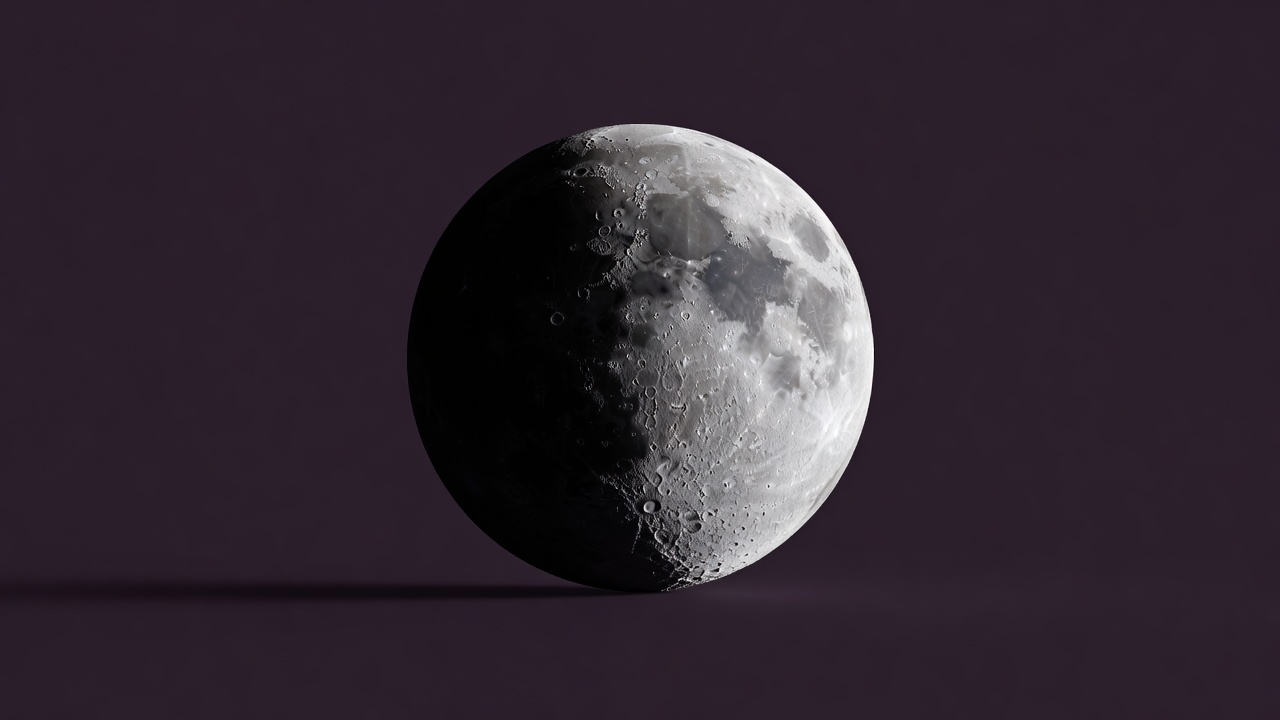
For sculpted three-dimensional relief, observe along the lunar terminator—the moving dawn-or-dusk boundary dividing sunlit and dark hemispheres. Between Day 4 and Day 10 after New Moon (waxing crescent through waxing gibbous), low grazing sunlight throws jagged black spire shadows across basaltic plains, catching isolated central peaks before crater floors see sunrise.
Mare Crisium & Da Vinci earthshine glow over twilight horizons.
Montes Apenninus, Archimedes, Plato, and the southern crater chain.
Sinus Iridum ("Bay of Rainbows"), Clavius, and Copernicus terraced walls.
Sunset shadows reverse across Mare Imbrium before dawn.
Four Selenographic Landmarks for Travel Scopes & Binoculars
Even braced 10x50 binoculars distinguish dark volcanic maria (ancient flood-basalt plains formed 3.1 to 3.9 billion years ago) from bright anorthositic highlands. Add a compact tripod-mounted spotting scope or 70mm–90mm refractor at 60x to 120x magnification to trace these four showpieces:
- Mare Crisium (Sea of Crises): Isolated oval basin near the north-eastern limb, 555 km across, conspicuous in binoculars just three evenings after New Moon and again as sunset sweeps across it shortly after Full Moon.
- Montes Apenninus: A rugged 600-kilometre mountain arc bordering south-eastern Mare Imbrium, rising nearly 5,000 metres above the lava plain; Apollo 15 touched down near Hadley Rille at its northern foot.
- Rupes Recta (The Straight Wall): Located in Mare Nubium around Day 8, this 110-kilometre linear fault drops 300 metres at a gentle slope that casts a razor-sharp dark line under morning sun and gleams bright white two weeks later under evening light.
- Sinus Iridum & Jura Mountains: Around Day 10.5, sunlight catches the curved crest of the Jura range while the adjacent bay floor still lies in darkness, creating the famous "Golden Handle" effect visible even at 30x magnification.
Planning Moonlit Landscapes and Horizon Alignments
Telephoto images showing an oversized amber Moon rising behind a lighthouse, sea stack, or alpine spire rely on camera-to-subject distance rather than optical trickery. Because the Moon subtends roughly 0.5 degrees of arc across the sky, standing two kilometres back from a ten-metre-wide tower makes the lunar disc span roughly 1.75 times the tower's width in a 400mm telephoto frame.
"Time full-moonrise photographs for the evening immediately before astronomical Full Moon, when the disc breaches the eastern horizon fifteen to twenty-five minutes prior to sunset—balancing twilight land luminance with crisp lunar maria detail." Telephoto Ephemeris Technique
Equally rewarding is earthshine (Leonardo glow): when a slender 5% to 15% crescent hangs in deep evening or morning twilight, sunlight reflected off Earth's oceans and clouds softly illuminates the Moon's night hemisphere. A 2-to-4-second exposure at 85mm to 200mm records ash-grey lunar seas alongside faint background stars in Taurus or Scorpius. Pair lunar timing with dark meteor nights on Meteor Watch or choose suitable optics on Sky Equipment.